
Get Shopify order data out of the PDF and into your systems
Shopify takes the order. Parseur moves it everywhere else it needs to go. Parseur reads the order PDFs and confirmation emails your store generates, extracts customer, line items, and totals with AI, and sends them through Zapier to your spreadsheet, POS, fulfilment tool, or accounting system as each order lands.
-
Order confirmations and invoices
Parseur extracts order number, customer, shipping address, and totals from each Shopify order PDF, so the data reaches your reporting sheet without anyone opening the file.
-
Line items as separate rows
Parseur splits repeating product rows into individual records, so a five-item order becomes five rows in your inventory or accounting system rather than one unreadable cell.
-
Fulfilment and delivery handoff
Parseur passes the parsed order to your fulfilment, delivery, or kitchen system in real time, removing the retyping step between the store and whoever actually ships the box.
How the Shopify integration works
-
1. Create your Parseur mailbox
- Sign up and get a dedicated email address where your documents land.
-
2. Forward your emails
- Send emails manually or set up auto forwarding so every new one arrives on its own.
-
3. AI extracts the data
- Parseur reads each email and pulls out the fields you need as structured data.
-
4. Data lands in Shopify
- Zapier picks up the parsed data and sends it to Shopify in real time.

What is Parseur?
Parseur is a powerful document processing software to extract text from emails, PDFs and documents and automate your workflow. All Parseur features.

What is Shopify?
Shopify is an e-commerce platform that enables anyone to set up an online store, without any coding knowledge.

What is Zapier?
Zapier is a cloud automation tool that connects apps together. You can connect two or more apps to automate repetitive tasks without coding or relying on developers to build the integration.
Trusted for order automation in production
Barberitos, a 50-unit fast casual restaurant chain, uses Parseur to parse incoming digital orders and pass them into its Clover POS and downstream cloud apps. The setup removed the per-platform tablets from every restaurant and replaced manual re-entry with an automated pipeline, the same order-data problem Shopify merchants face.
- Drop in Barberitos digital order error margin
- 50%
- Documents processed by Parseur since 2016
- 100M+
- Parseur rating on Capterra and GetApp
- 5/5
You've had your Shopify store for a while now and the e-commerce business is booming for you. More clients are buying from your online store resulting in an increase in sales and profits; which feels amazing. But, as your e-commerce store grows, so do the boring repetitive tasks such as manually exporting PDF Shopify orders to a CSV file or creating a new client in the CRM tool.
What if there was an integration connecting your Shopify orders to a CRM or accounting tool?
Let's have a look at how you can save up countless hours of manual data entry work so that you can focus on building more meaningful relationships with your clients.
This article focuses on automating your Shopify PDF orders; but, there are a lot more you can do with Parseur and Shopify integration. For example, you can:
- Add new Shopify orders to a Google Sheets spreadsheet
- Add new Shopify customers to a Mailchimp list for your email marketing
- Send real time order notifications from Shopify to Slack
- Book new sales from Shopify to your accounting software
Shopify: the best e-commerce platform for small business
Undoubtedly, COVID-19 gave rise to online shopping and since then, Shopify's revenue has doubled on the market. The number of digital buyers increased enabling small businesses to have more sales and revenue online. And, as a small online retailer, Shopify also offers you the opportunity to get funding
Why export Shopify orders automatically?
Keeping your Shopify store up and running all by yourself is not a walk in the park. There are a gazillion things to take care of from updating the Shopify store with new products to making sure that the customer receives his products in time and taking care of administrative and sales tasks such as creating a new client in your accounting software.
As an online retailer, you already have a lot on your plate and let's not forget, the hassles with e-commerce returns!
Let's say that you receive hundreds of order confirmations daily (in PDF format) from existing and new clients. You have to download the invoices, manually go through them, filter out the customer details and copy-paste them to a CRM tool.
Let's face it - this process looks tedious and time-consuming.
The rise of e-commerce automation
E-commerce automation is the use of technology to automate daily and repetitive tasks to help e-commerce businesses scale. It means creating automated workflows between your online store to other applications. Once an eCommerce business starts to scale, repetitive tasks add up.
Often, businesses turn to new hires but using e-commerce automation, you can save costs and focus on other productive tasks.
E-commerce automation takes different forms and it depends on what you need to automate in your online business.
In the context of exporting PDF Shopify orders to another application, integrating Shopify with a PDF parser will do the job.
How can you export Shopify orders to other applications?
There are 3 ways in which you can export Shopify orders namely:
- Export data manually to a CSV file using Shopify
- Use Shopify's order API
- Extract text from Shopify PDF orders using an automated PDF parsing software like Parseur
Shopify's built-in functionality of exporting orders to CSV files is a great feature until you start getting a lot of orders. In fact, you also can't integrate the CSV file automatically with another tool, you need to manually upload the CSV every time.
And, using the REST API requires technical knowledge or hiring a developer which increases your cost.
So, let's look at the other solution of using a PDF parser. It will allow you to send your order data as it comes in real-time to any application!
What is a PDF parser and how can it boost your Shopify automation?
In simple terms, a PDF parsing tool helps to extract data from PDF documents. A PDF parser allows you to:
- Extract text from PDF Shopify invoices
- Extract images or barcodes
- Extract tables from PDF Shopify orders
Parseur is a powerful PDF parsing solution with an OCR engine which automates data extraction from PDF documents automatically. Rest assured that even if you have zero coding knowledge, you will be able to use Parseur. Parseur is a point-and-click editor which means that all you have to do is highlight the text that you want to extract and create a template for it.
With the integration of Parseur and Shopify, you can:
- Export PDF Shopify orders to Google spreadsheets
- Create new Shopify customers in a CRM tool
- Add sales receipt to your accounting software
Let's take a look at how we can create an automated workflow from Shopify to another tool to export PDF Shopify orders and invoices.
How to export PDF Shopify orders?
For this integration article, we will add data extracted from the Shopify invoices to FreshBooks. You can replace FreshBooks with your CRM or accounting tool but the steps will remain more or less the same.
What you will need for this integration is:
- A Parseur mailbox
- A Zapier account
- A FreshBooks account
Step 1: Create your free Parseur mailbox
Parseur is free to start with all the features available and you pay as you grow. Once you've created your account, you will be prompted to create the Parseur mailbox where you can choose the option "invoice".

Step 2: Create an automated workflow between Shopify and Parseur
Either drag and drop your PDF document into the Parseur app or send it via email. If you decide to send all the PDFs via email, create an auto-forwarding rule between your personal mailbox and Parseur.
Step 3: Teach Parseur what data to extract from the Shopify invoice
Parseur lets you work with the PDF document in its original format, unlike other data extraction software where PDFs are received in the text format only.
As an intelligent document processing tool, Parseur will extract data from the PDF invoice automatically.
You can also create a table field for all the items purchased by your customers.
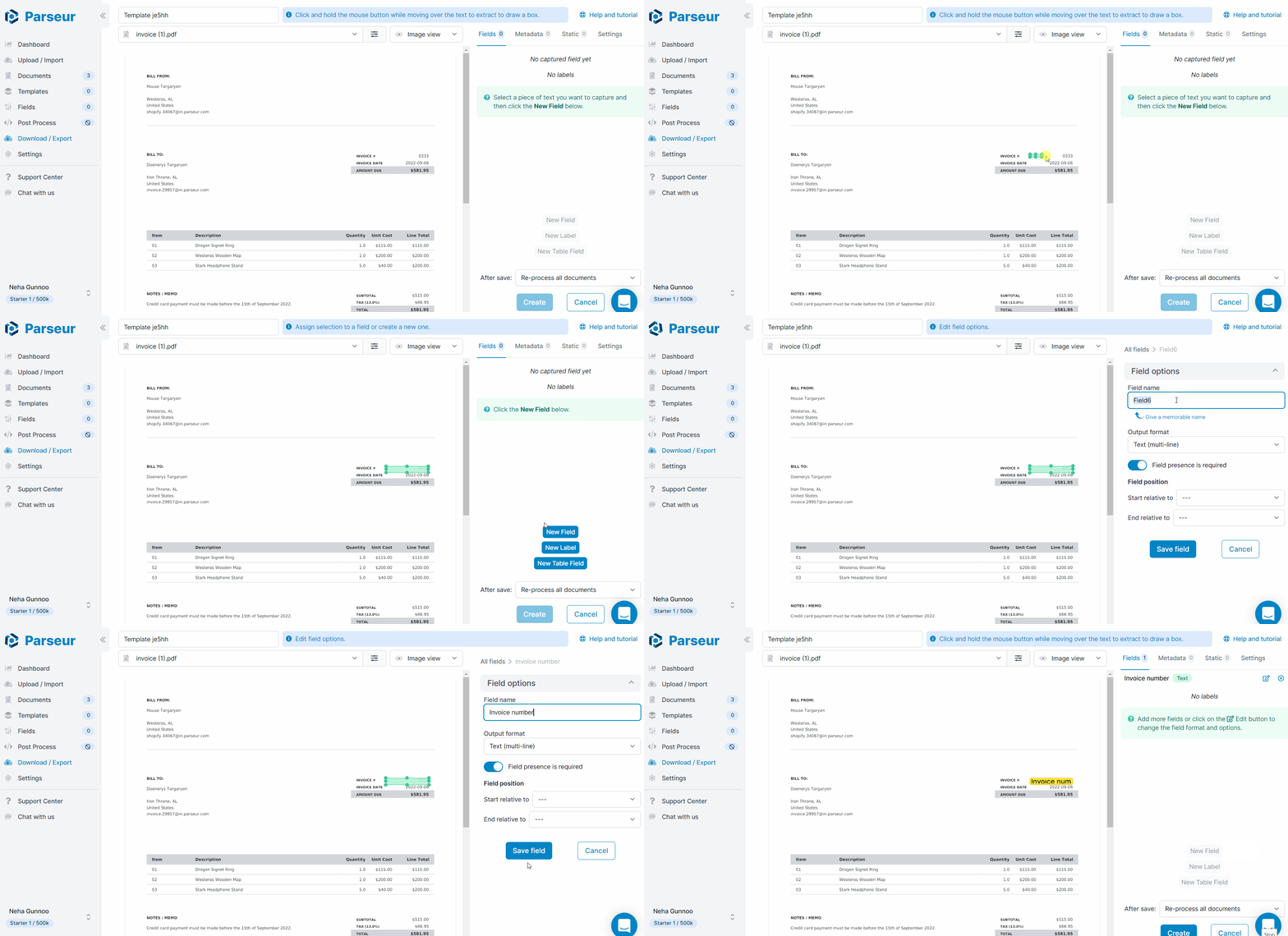
You'll be guided through a short tutorial when creating your first template. You can also refer to our support article on how to create a template for more details.
Bonus point: invoices and orders come in different formats and layouts. Parseur lets you create as many templates as you have layouts and uses Zonal OCR and Dynamic OCR to extract the right data.
Step 4: Check extracted data from PDF Shopify invoice
Once your template has been created, verify if the parsed results are what you needed.
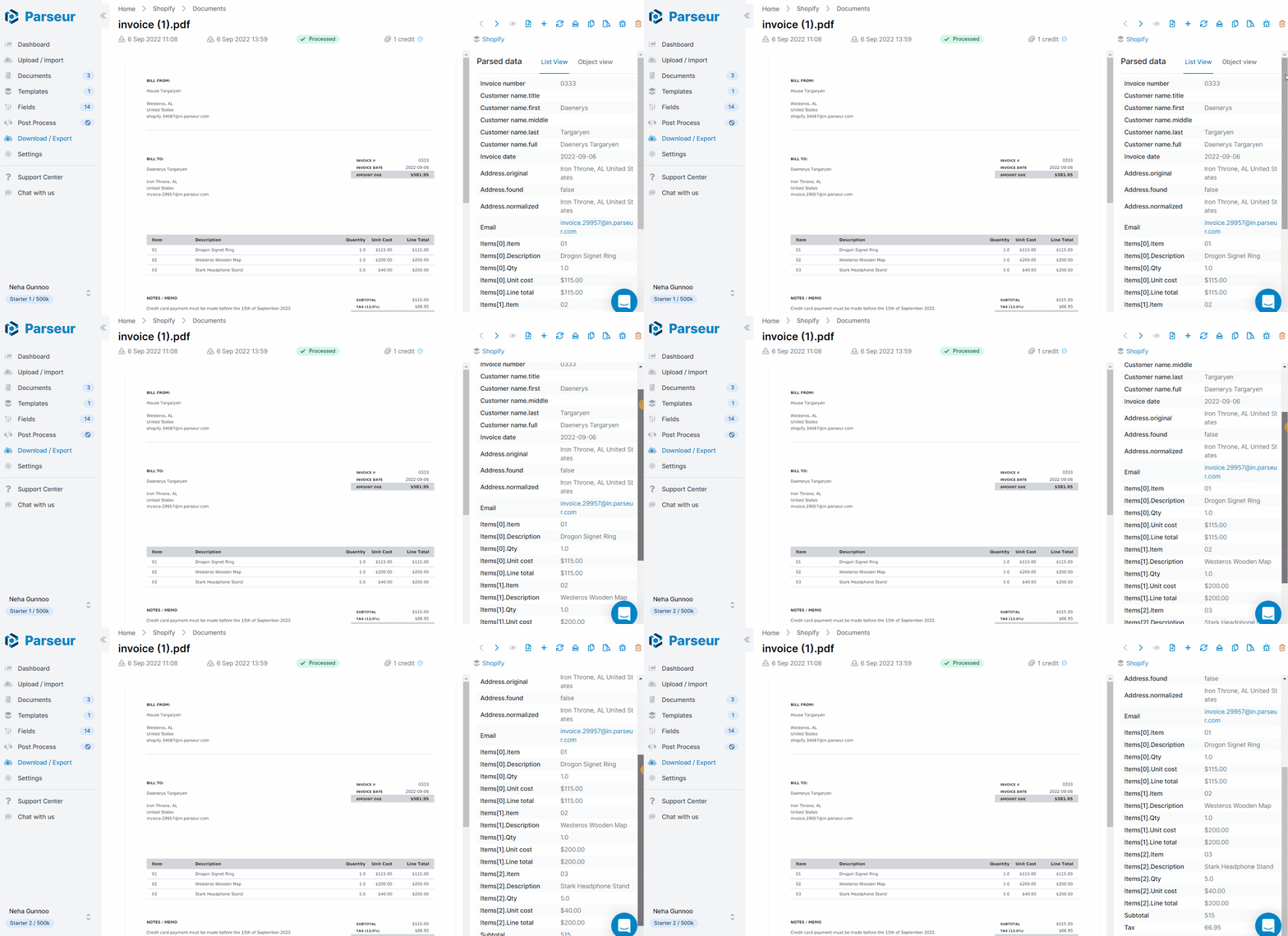
Step 5: Export PDF Shopify orders to Zapier
Zapier acts as a medium between Parseur and thousands of application like FreshBooks. Parseur comes with a native integration with Zapier. Click on "export", and "Zapier" and search for the tool that you need. We are going to look for the FreshBooks tool and click on "Use this Zap". It's going to redirect you to the Zapier dashboard.


Step 6: Create a workflow in Zapier
Connect Zapier with Parseur by selecting your Parseur account and the correct mailbox so that Zapier can retrieve the parsed data.


Once done, connect Zapier with your FreshBooks account and choose the "event. You have several options depending on what workflow you want such as:
- Create a new client
- Add payment to invoice
You will have to select the business to which you want to add the payment.

Step 7: Teach Zapier which data to use from the PDF Shopify order
This means that you are teaching Zapier which data you need to send from Parseur to FreshBooks.
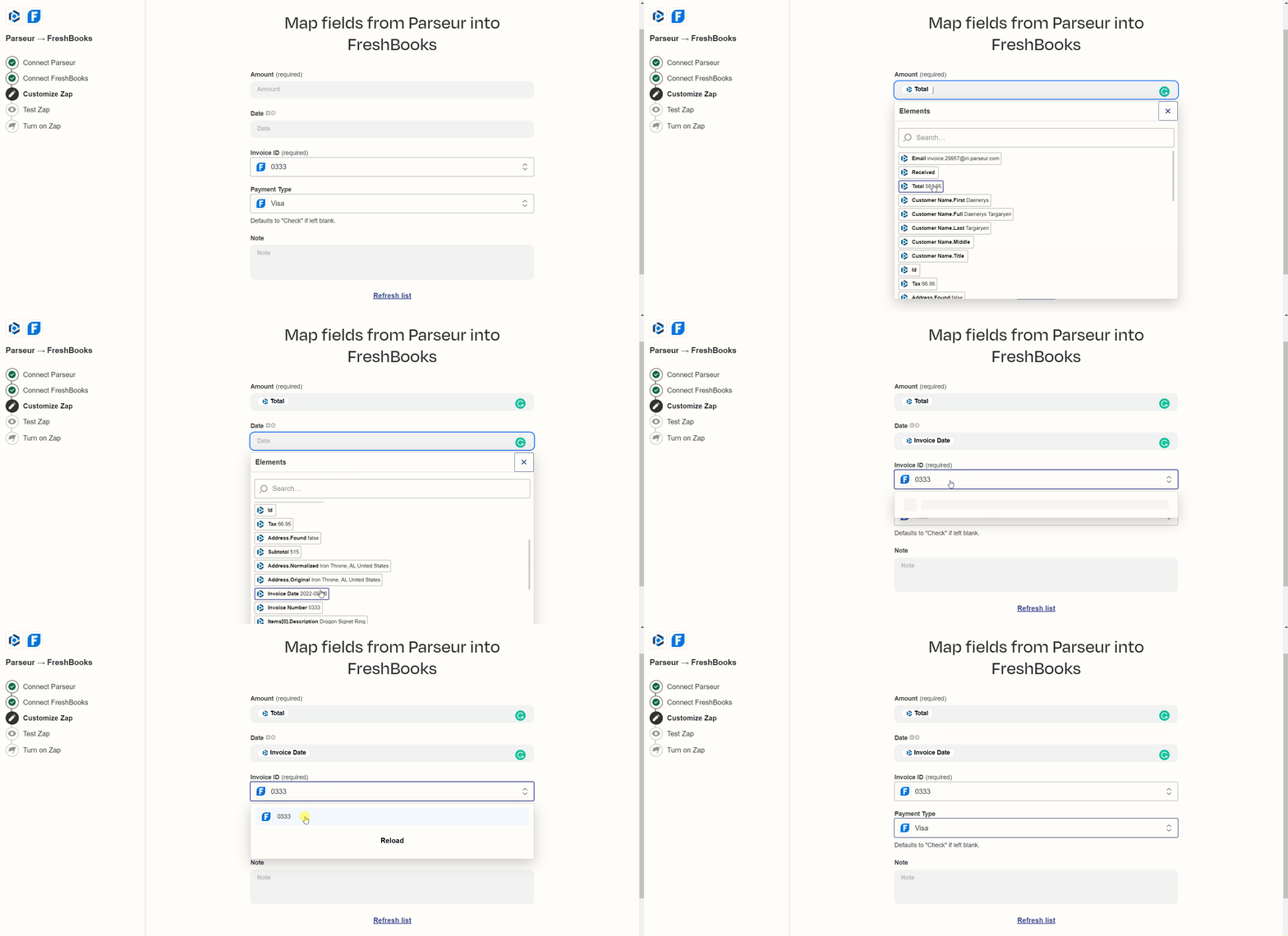
Once done, you can send a test trigger from Zapier to FreshBooks to verify whether the extracted data has been sent correctly.


If you're satisfied with the process, turn on the Zap.

It may seem like a lot of steps for this integration but what's great is that you only have to create those steps once. Yes, only once! Each time Parseur receives a Shopify invoice, data will be extracted and sent to FreshBooks automatically with no human intervention.
Scale your Shopify store with automation
The best way to reduce manual data entry tasks and increase productivity is to embrace automation. An automated workflow is going to save you time and additional costs as well and, you will be able to focus on providing a better customer experience.