
Google Docs template automation for documents that arrive by email
Google Docs can create a document from a template. Someone still has to type the data in. Parseur is an AI email parser that reads each incoming email or PDF, extracts the fields you named, and hands them to Zapier to populate your Google Docs template automatically. One new document per record, nothing retyped.
-
Resume emails to candidate profiles
Parseur extracts name, contact details, skills and experience from each CV that lands in your inbox. Zapier fills a standard candidate profile in Google Docs so recruiters compare applicants on one format.
-
Lead emails to quotes and contracts
Parseur captures the name, company and requirements from lead and order emails. Each one becomes a pre-filled proposal or contract in Google Docs, saved to Drive with the client name in the filename.
-
Invoice PDFs to summaries
Parseur pulls vendor, invoice number, due date and total from supplier invoice PDFs, scanned ones included. Zapier turns each one into a formatted invoice summary document your approvers can read at a glance.
How the Google Docs integration works
-
1. Create your Parseur mailbox
- Sign up and get a dedicated email address where your documents land.
-
2. Forward your emails
- Send emails manually or set up auto forwarding so every new one arrives on its own.
-
3. AI extracts the data
- Parseur reads each email and pulls out the fields you need as structured data.
-
4. Data lands in Google Docs
- Zapier picks up the parsed data and sends it to Google Docs in real time.

What is Parseur?
Parseur is a powerful document processing software to extract text from emails, PDFs and documents and automate your workflow. All Parseur features.

What is Google Docs?
Google Docs is an online word processor and part of the free, web-based Google Docs Editors suite offered by Google.

What is Zapier?
Zapier is a cloud automation tool that connects apps together. You can connect two or more apps to automate repetitive tasks without coding or relying on developers to build the integration.
Trusted for Zapier workflows in production
BuildYourBnB, a short-term rental business hosting over 10,000 guests per year, uses Parseur with Zapier to route data from booking emails into its tools automatically, the same Parseur to Zapier setup this Google Docs integration uses. Founder Boris Mordkovich tested Parseur against Zapier's own email parser and found it more accurate on the rich HTML emails that platforms send.
- Guests hosted per year on Parseur-powered workflows
- 10,000+
- Documents processed by Parseur since 2016
- 100M+
- Parseur rating on Capterra and GetApp
- 5/5
Google Docs has a "Create Document from Template" action in Zapier that replaces placeholders in a template file with actual data, then saves a new populated document to your Drive. The template stays intact and a fresh document is generated for each record.
Parseur is the extraction layer that makes this work for document-heavy workflows. Instead of pulling data from a spreadsheet (the most common trigger for this Zapier action), you're pulling it from incoming emails, PDF attachments, scanned forms, or resumes. Parseur reads each document, extracts the fields you defined, and hands clean named values to Zapier, which then fills your Google Docs template automatically.
Key Takeaways
- Parseur extracts structured fields from emails, PDFs, and scanned documents, and Zapier uses those fields to populate a Google Docs template and create a new document in Drive automatically.
- Google Docs templates use
{{placeholder}}syntax. Each placeholder maps to a Parseur field in Zapier. A new document is created per processed record and the template is never modified. - Common workflows include generating candidate profile documents from CV emails, creating quotes or proposals from lead data, populating contract templates from deal fields, and producing formatted invoice summaries.
- The integration connects via Zapier. Make also supports this workflow with its Google Docs module.
- Both Parseur and Zapier have free plans.
How the template integration works
The Google Docs "Create Document from Template" action in Zapier works by scanning a template file for {{placeholder}} tags and replacing each one with a value you map from your data source. No spaces or hyphens in placeholder names: use {{CandidateName}} or {{candidate_name}}, not {{Candidate Name}}.
Each time the Zap runs, a new Google Doc is created in your Drive with the placeholders filled in. The original template file is never touched. You can name the output file dynamically using the same extracted values, for example Invoice - {{VendorName}} - {{Date}}, so each document is easy to find.
Parseur sits in front of Zapier and handles the part that a spreadsheet trigger can't cover: documents that arrive by email, as PDF attachments, as scanned files, or as images. Once Parseur extracts the fields, Zapier handles the rest exactly as it would with any other data source.
What you can build with this integration
The Parseur and Google Docs combination works well for any workflow where a recurring document type needs to produce a formatted output document:
- Candidate profile sheets: Incoming CV or resume emails are processed by Parseur, which extracts name, contact details, skills, and experience. Zapier populates a standardised candidate profile template in Google Docs for each applicant. See the job search guide.
- Quote and proposal generation: Lead inquiry emails arrive in Parseur. The extracted name, company, and requirements feed into a proposal template in Google Docs, giving the sales team a pre-filled starting point.
- Contract population: Deal or order data extracted from incoming emails or forms fills a contract template automatically. Each generated contract is saved to a dedicated Drive folder with the client name in the filename.
- Invoice summaries: Supplier invoice PDFs are parsed by Parseur, and the extracted vendor, total, due date, and line items populate a formatted invoice summary document. See the invoice processing guide.
- Real estate listing documents: Property inquiry emails or listing data populate a standard property brief template in Google Docs for each new listing or client inquiry.
- Lead intake documents: Contact form submissions are parsed and each lead's details fill a client intake template, giving the team a formatted document to work from. See the lead email guide.
Step-by-step: Set up the Parseur and Google Docs integration
The example below uses resume emails to auto-generate candidate profile documents, but the same steps apply to any document type.
Step 1: Create your Parseur account
Parseur is free to start with all the features available.
Step 2: Forward a sample document to Parseur
Forward a sample email or PDF to your Parseur mailbox address. For this example, send a resume. Once Parseur receives it, confirm the mailbox type and name.
Step 3: Review the extracted fields
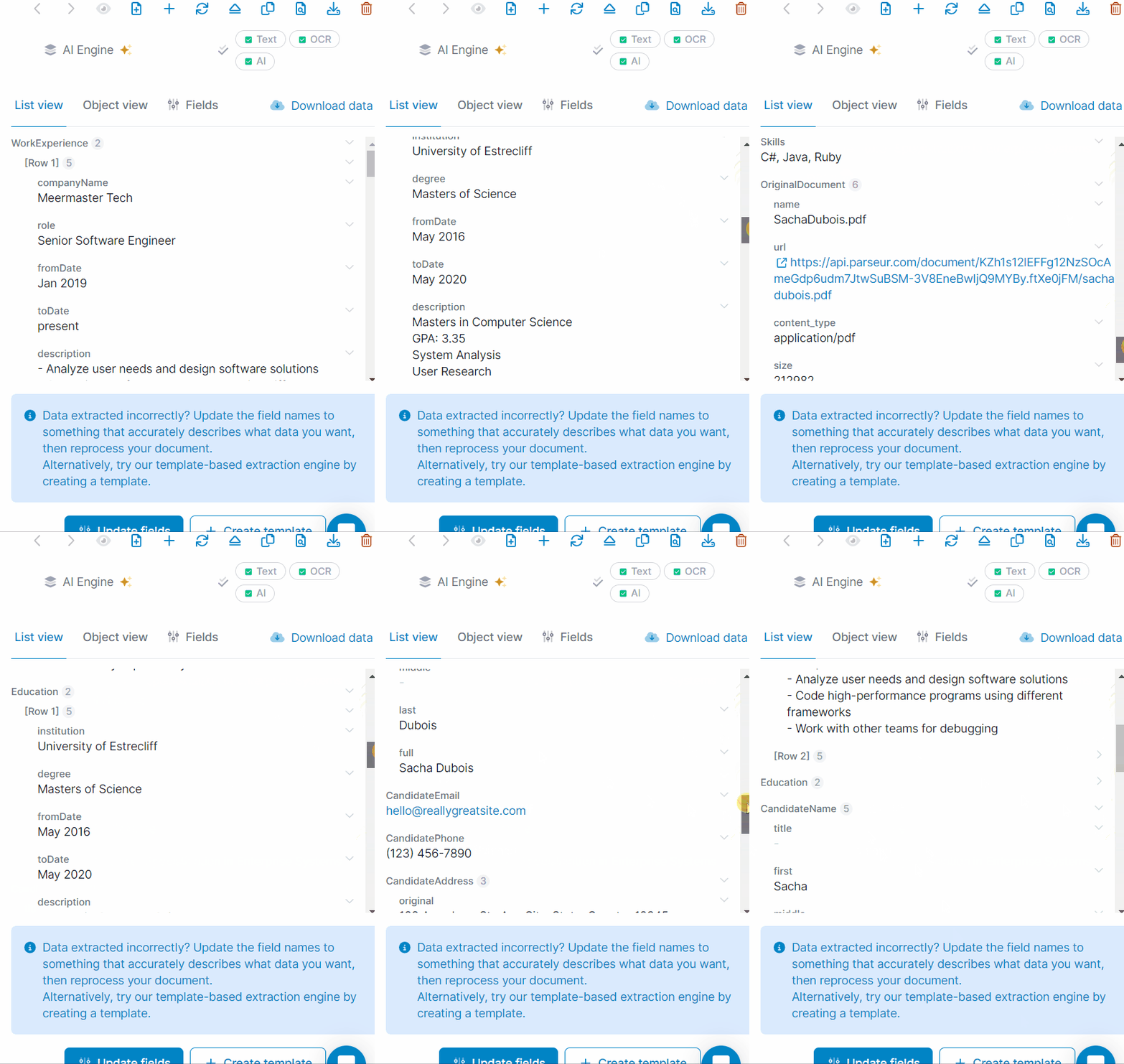
Parseur's AI extracts the data automatically. Review the parsed fields to confirm accuracy, and adjust the template if any fields need to be added or renamed.
Step 4: Prepare your Google Docs template
Create a template document in Google Docs with {{placeholder}} tags wherever you want extracted data to appear. The placeholder names can be anything you choose: you'll map them to Parseur fields in Zapier.

For example: {{CandidateName}}, {{CandidateEmail}}, {{Skills}}. Keep placeholder names free of spaces and hyphens.
Step 5: Connect Parseur to Zapier
In Parseur, go to Export, then Zapier. Select Parseur as the trigger app in Zapier and choose New Document Processed as the trigger event. Connect your Parseur account and select your mailbox.

Zapier will prompt you to test the trigger using the document you forwarded in Step 2. This loads the extracted fields so you can map them in the next step.
Step 6: Connect Google Docs and map the fields
Set Google Docs as the action app and choose Create Document from Template as the action event. Select the template you prepared in Step 4.

Zapier displays the placeholders from your template. Map each placeholder to the corresponding Parseur field.

Step 7: Test and activate
Run a test to confirm the generated document in Google Drive has the correct data in each placeholder.

Once the test passes, turn the Zap on. Each document Parseur processes from that point creates a new populated Google Doc in your Drive automatically.
Note: the Zap creates a new document each time, it doesn't update the template file itself. If you want the generated documents saved to a specific Drive folder, set that in the Zapier action step.
Using Make instead of Zapier
Make also supports this workflow. Parseur connects to Make via webhook and Make's Google Docs module includes a "Create a Document from a Template" action that works the same way. Make is a good fit if you want to add conditional logic to the workflow, for example routing different document types to different templates, or sending the generated Google Doc link by email as a follow-up step. See the Make integration guide for the setup.
For routing extracted data to a spreadsheet instead of a document, see the Google Sheets integration guide.


