
Let a document be the trigger in your applet
IFTTT reacts to things happening. Parseur makes a document one of those things. Parseur reads each incoming email or file, extracts the fields you named, and POSTs them to your IFTTT Webhooks trigger, so an arriving invoice, order, or alert can start any applet you have built.
-
Documents as applet triggers
Parseur fires your IFTTT Webhooks event as soon as a document is parsed, passing the extracted values along so the applet can act on the content rather than just the arrival.
-
Alerts and notifications
Parseur pulls the fields that matter out of alert emails and IFTTT delivers them wherever you want to be reached, from a phone notification to a smart display.
-
Connected devices and services
Parseur turns an incoming order or booking into structured values IFTTT can pass to the hundreds of services and devices it supports, with no code in between.
How the IFTTT integration works
-
1. Create your Parseur mailbox
- Sign up and get a dedicated email address where your documents land.
-
2. Forward your emails
- Send emails manually or set up auto forwarding so every new one arrives on its own.
-
3. AI extracts the data
- Parseur reads each email and pulls out the fields you need as structured data.
-
4. Data lands in IFTTT
- Parseur delivers the parsed data to IFTTT through webhooks in real time.

What is Parseur?
Parseur is a powerful document processing software to extract text from emails, PDFs and documents and automate your workflow. All Parseur features.

What is IFTTT?
IFTTT, short for If This Then That is a web-based service that connects multiple apps to create a change of conditional statements. In simple terms, it is a conditional trigger system that will automate your daily tasks. IFTTT is available on a web interface or on Apple Store and Play Store.
Trusted for webhook-driven automation in production
Emonkey builds API integrations for accounting systems across Scandinavia and needed webhook-enabled document intake, which mail aliases could not provide. Founder Piet Deprez moved to Parseur so incoming client files trigger his workflows automatically, the same webhook mechanism this IFTTT integration uses.
- Downtime across Emonkey's years running Parseur in production
- 0
- Documents processed by Parseur since 2016
- 100M+
- Parseur rating on Capterra and GetApp
- 5/5
With IFTTT, you can connect your smart home devices and automate your manual daily tasks! From Amazon Alexa to Google Assistant, you can easily end up with a smart home that is integrated with the IFTTT app.
IFTTT integration with Parseur
Parseur is a powerful data entry automation software to automate data extraction from emails and PDFs. The parsed data can then be downloaded or exported to any application of your choice.
Parseur integrates with IFTTT via Webhook just like with Make.
For this article, we will send extracted data to Twitter using IFTTT and Webhook. We will show how to publish a message on your Twitter account automatically. We will create a rule using Webhooks which will connect to IFTTT and thus allowing you to send automatic tweets.
What are Webhooks?
Webhook are used to exchange data between applications and servers using external APIs. Parseur has an integrated Webhook system that enables you to send parsed data to a server that accepts JSON data via HTTP POST.
Step 1: Create your free Parseur mailbox
Parseur has a built-in library of templates for specific industries such as real estate, food ordering, or e-commerce among others. You can also create custom templates, depending on which industry you are in.
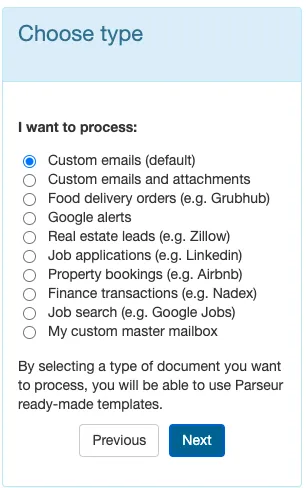
Since we are going to send a custom email to the Parseur mailbox, we will select the first option.
Select the first option "custom emails and attachments"
Step 2: Forward your email to the Parseur mailbox
The email will arrive within less than 10 seconds! We recommend that you set up an auto-forwarding rule from your personal mailbox to your Parseur mailbox so that to automate this process as well.
Step 3: Watch AI extract data you want to send to IFTTT
Every other similar email you send to your Parseur mailbox will be automatically processed.

We are naming the data fields as "Value1", "Value2" and "Value3" as when triggering the IFTTT applet, the Webhook can only take up to three value parameters.
Step 4: Sign in to your IFTTT account
To communicate with IFTTT, you will need to create a Webhook in your IFTTT account and copy the Webhook key in your Parseur mailbox. This is called applet creation. Applets are tools within IFTTT that act as a bridge between two actions.
The first event is the "IF" part and the second one is the "Then That" part.
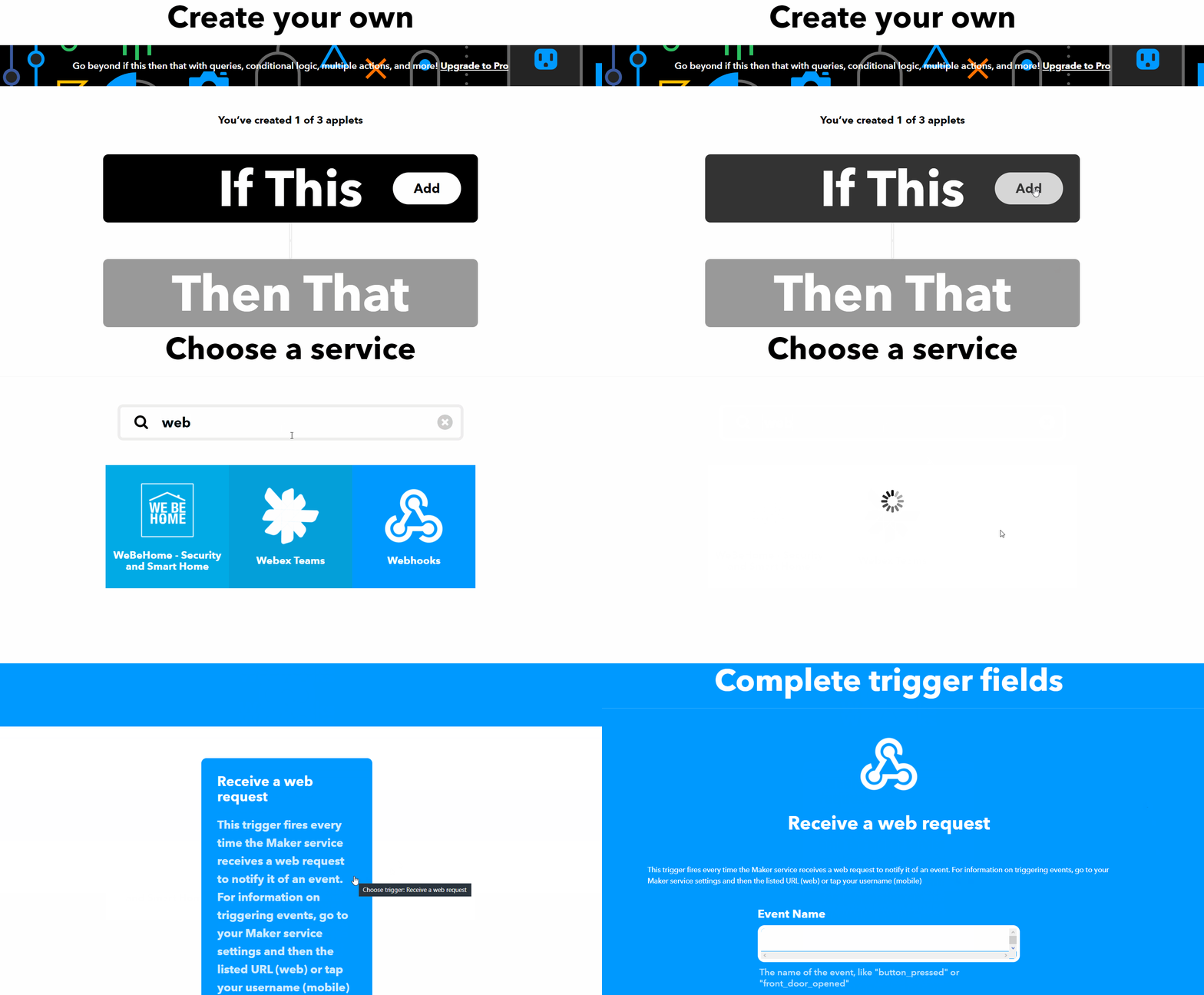
For the "IF" part, we will be creating a Webhook as shown below and name the event:

Now, for the "Then That" part, we will choose Twitter:


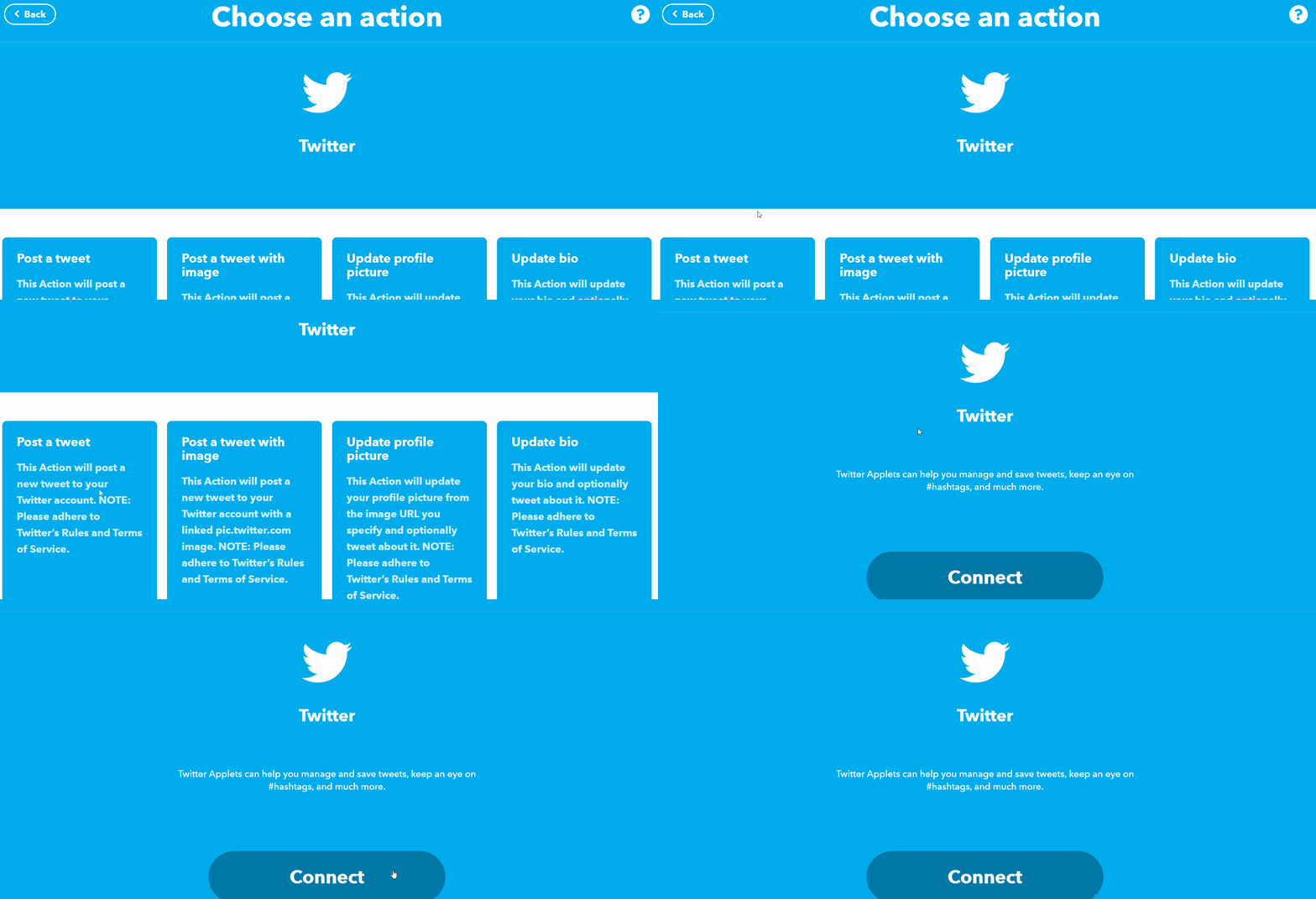
If you haven't connected with Twitter before, you will be asked to authorize IFTTT to access your Twitter account. Once done, you will now be able to customize your tweet text and click on "Create action".

Confirm your settings and click on "finish"

How to obtain the Webhook URL in IFTTT?
You will need to insert the Webhook URL in your Parseur mailbox so that it creates a connection with Parseur as well. It's a pre-authorized link generated by IFTTT that you will find under "My services" > "Webhooks" > "Documentation".
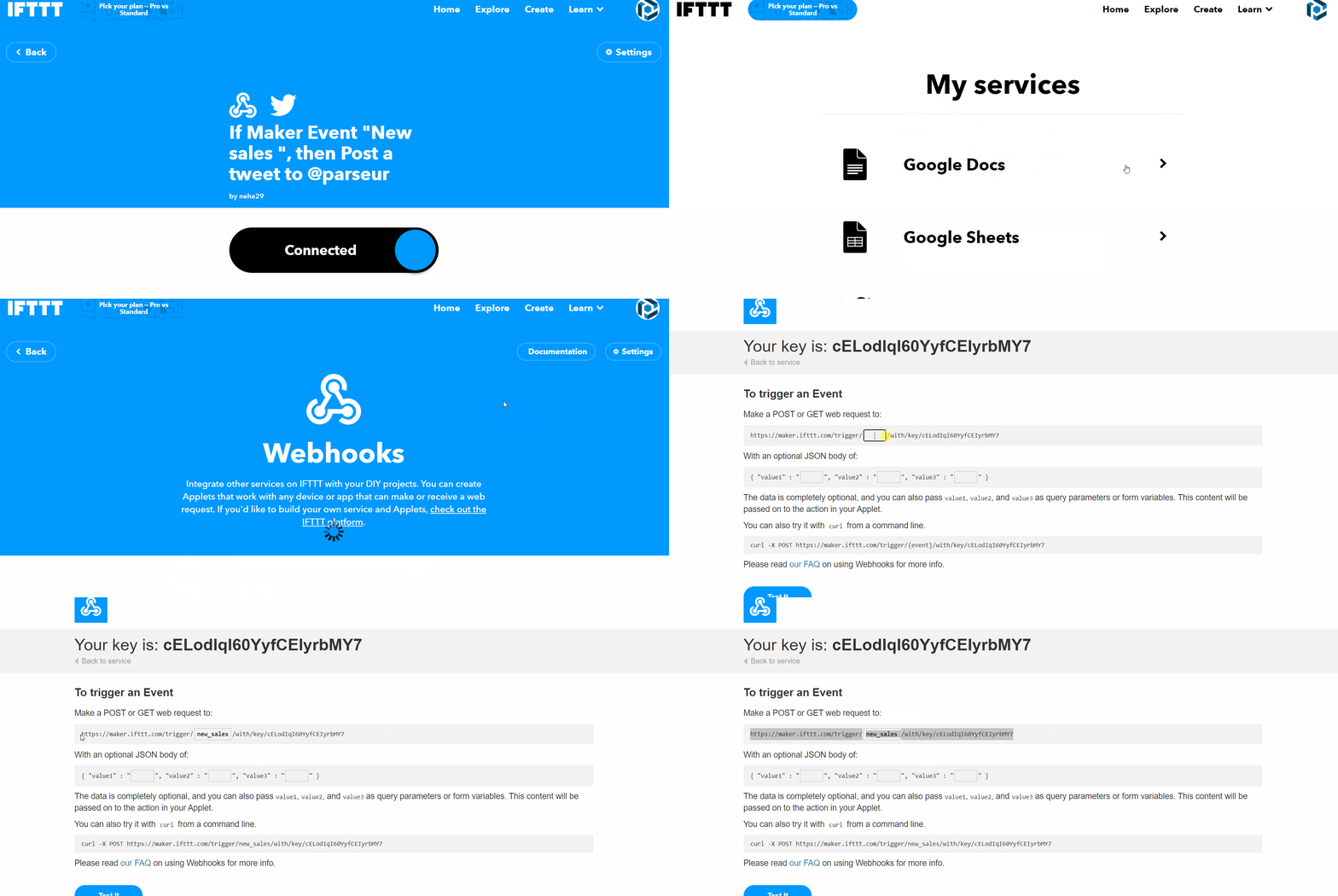
Copy the URL and go to your Parseur mailbox. Click on "export" and paste the Webhook key.

To test if the workflow has been automated with this conditional trigger system, you can either re-process an existing document or send a new email to your Parseur mailbox.

In case you're facing any difficulties, you can always chat with us 😊


